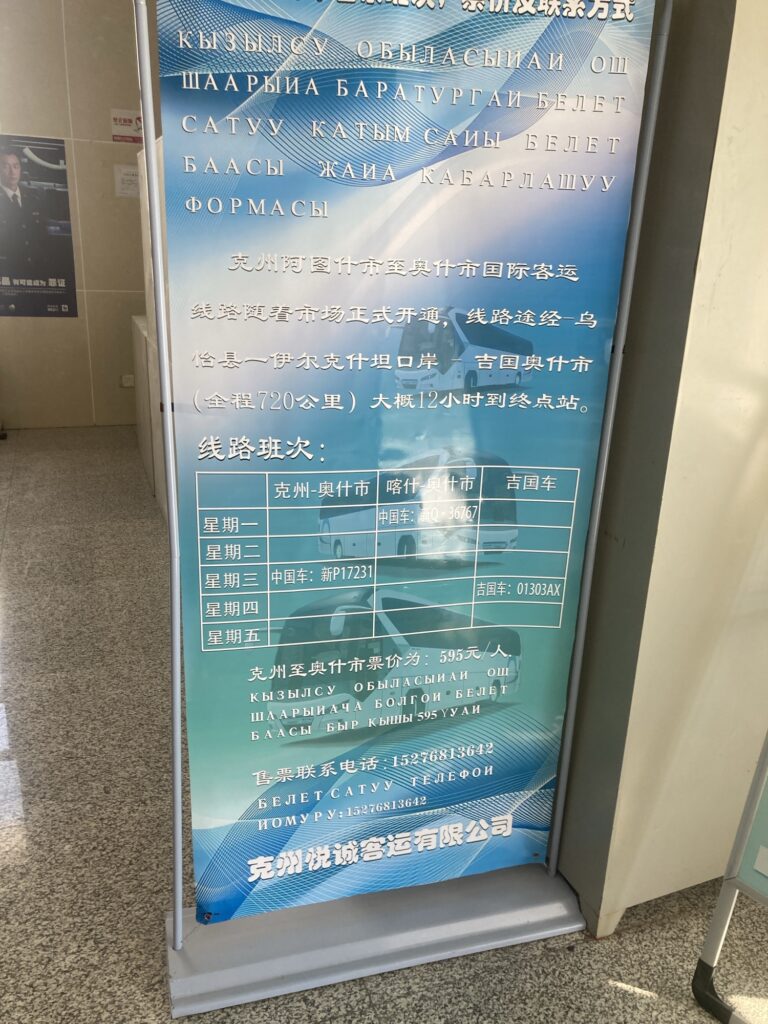
Travelling overland between Kashgar and Osh – without waiting for the once-weekly bus – is relatively straightforward. We completed the journey in two days with a mix of taxis, hitchhiking and a marshrutka, and doing the whole journey in one day is definitely possible.
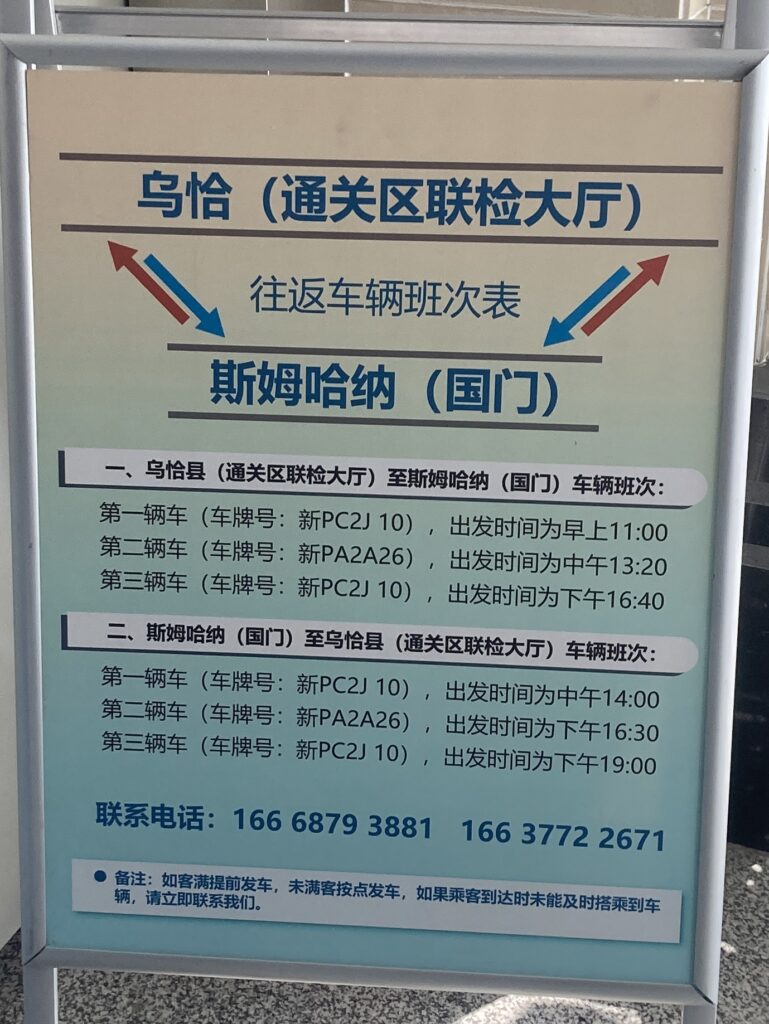
Our total cost came to around 300 yuan each, notably cheaper than 595 yuan for a bus ticket. Plus we had time to enjoy the journey, with a few stops, compared to going straight through and arriving in the middle of the night with the bus.
Kashgar
We definitely recommend spending at least a day or two in Kashgar, and the road between Kashgar and Tashkurgan, passing Muztag Ata is magnificent! Our post on travelling from Northern Pakistan to Kashgar has all the details.
Kashgar to the Irkeshtam Border
Based on our experience, we recommend either of the below options:
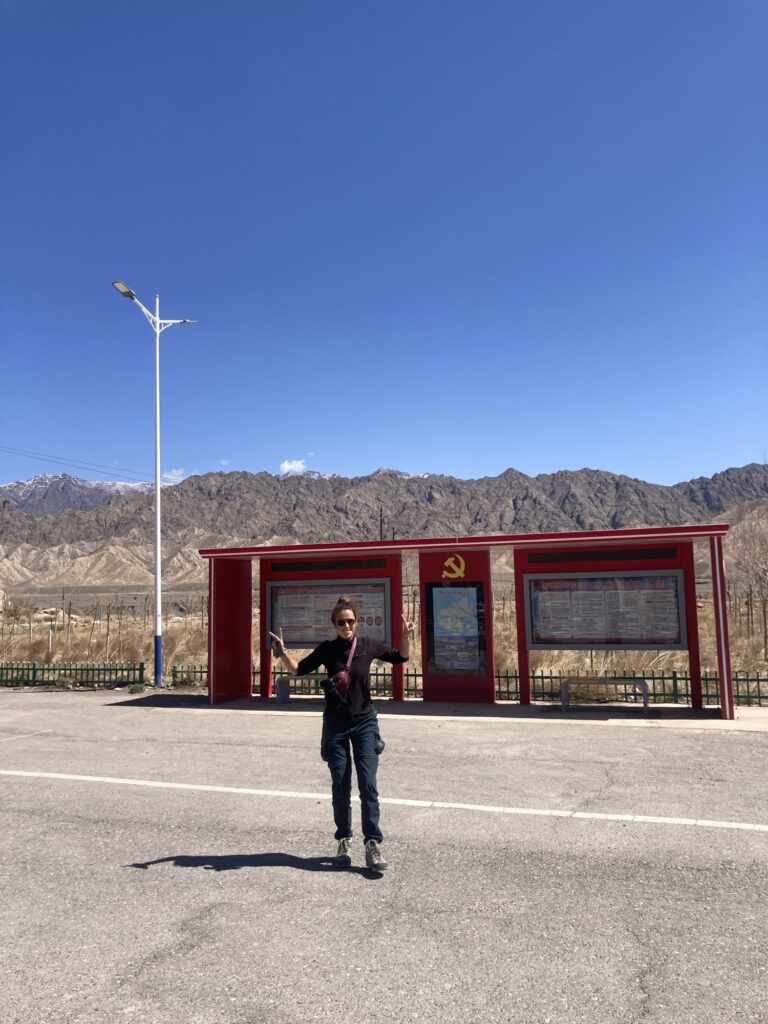
- Take a taxi (Didi) directly from your hotel to the Chinese customs here (GPS: 39.7229833, 75.2081846). From this point on you’ll have to take the shared van to the border at 150 yuan per person. To avoid being pressured to take the bus here at customs and pay the full 595 yuan price, we suggest travelling on a day when the bus doesn’t run.
- Find a vehicle to hitchhike with BEFORE the customs point, making sure they agree to go through customs with you and take you all the way to the immigration border post. We were not allowed to go through customs on foot and look for a ride AFTER customs.
Our experience – we took a Didi to the long-distance taxi station in Kashgar (Kake Express Passenger Transport Terminal) just north of the old city, you can find it here on AMap. We planned to take a shared taxi from here to the customs post, this should have cost around 50 yuan each. Nobody at the taxi station spoke any English so we used a translator and when that failed, called our hostel host in Kashgar to translate. We were told that foreigners cause delays at the police checkpoints, so shared taxis wouldn’t accept us. In the end, we paid 100 yuan each for a private taxi. This may have been an effort to get foreigners to pay more, but we really really insisted and a shared taxi simply wasn’t an option for us.
After about an hour and a half, we reached a police checkpoint outside Ulugqat. The police questioned us on our route and intentions, checked our passports, and sent us on. It definitely did take longer at this checkpoint for foreigners compared to locals.
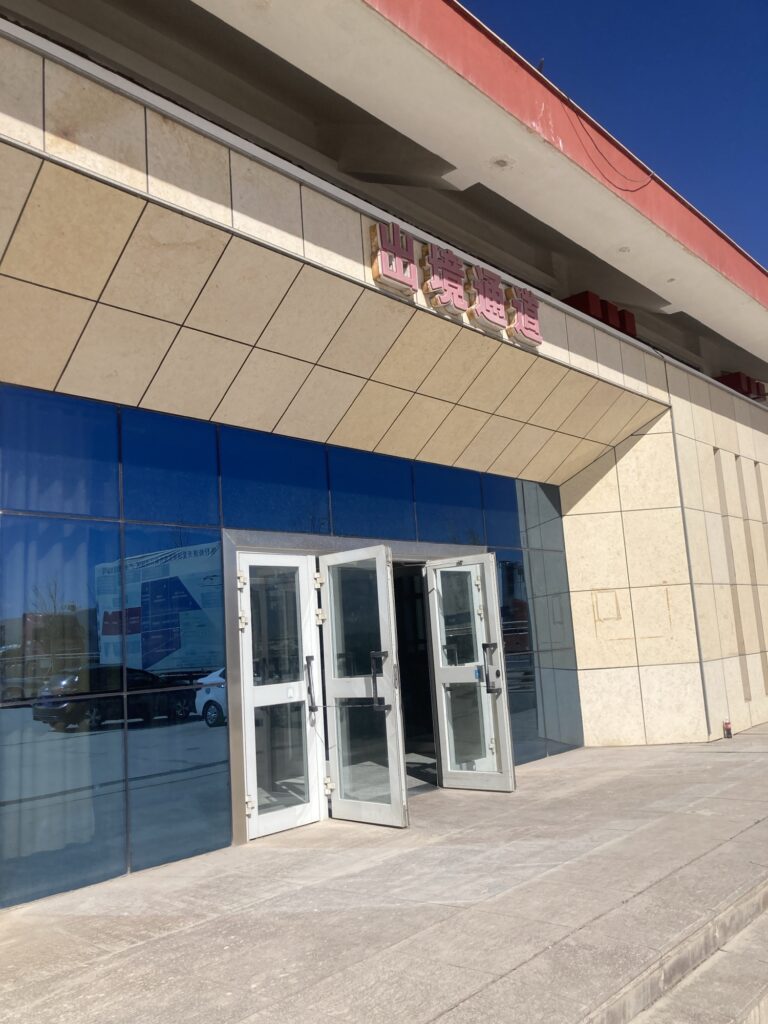
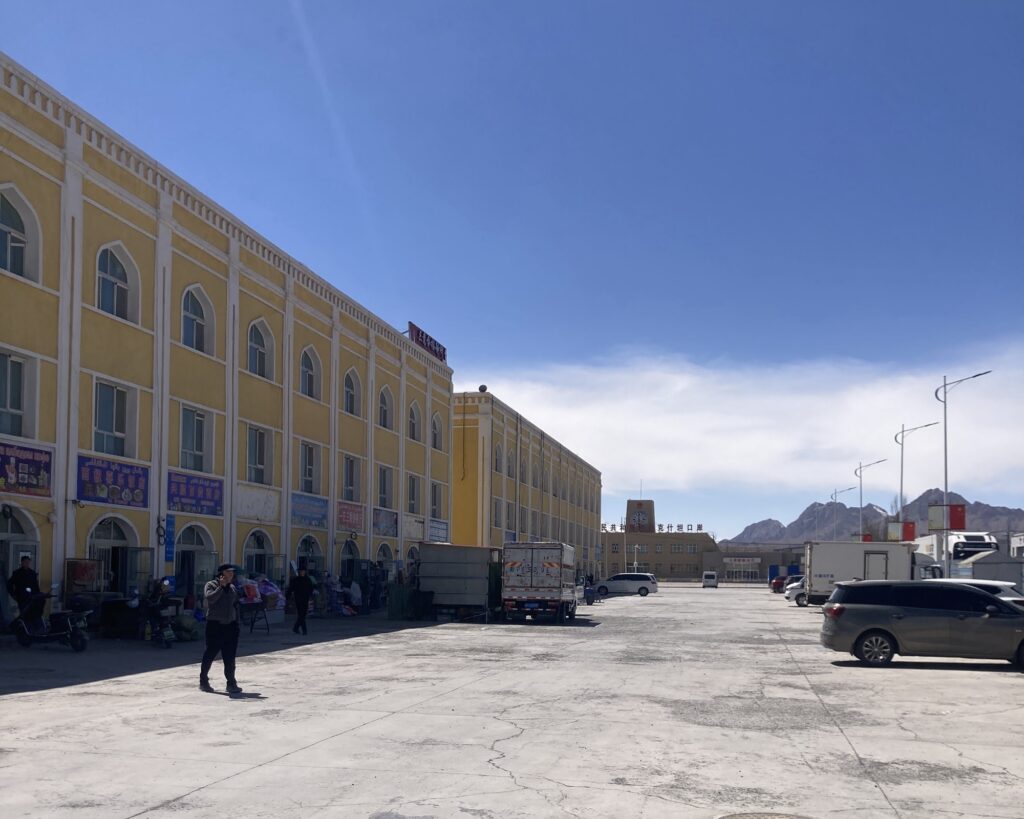
By midday, we arrived at Chinese customs. At this point, any ideas of hitchhiking the rest of the way vanished: customs officials wouldn’t let us through on foot, we had to accept to take the shared van (privately run) at a fixed price of 150 yuan per person. The van left at 13:00.
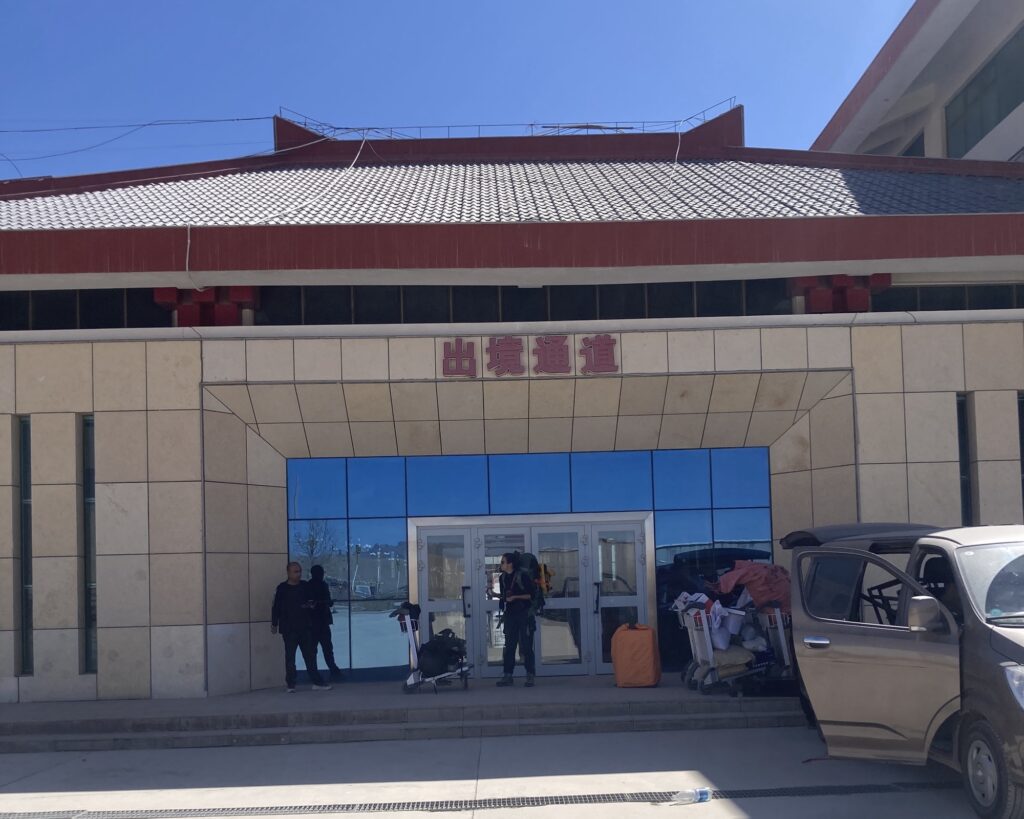
We arrived at Chinese immigration at the Irkeshtam border at 15:15. There are restaurants and shops here and basic basic toilets out in the open. We had to wait until 16:00 for Chinese immigration to reopen. An officer asked about our itinerary, checked where we had stayed in China, and went through our photos on our phone, thorough yet polite.
We were pushed to the front of the line in front of all the truck drivers, and they then organised a taxi to the border line for us, as we were told we couldn’t walk. We waited and waited, turns out no one had told us when the taxi van turned up. We paid 10 yuan each via WeChat or Alipay, heading off around 17:00.
Crossing into Kyrgyzstan
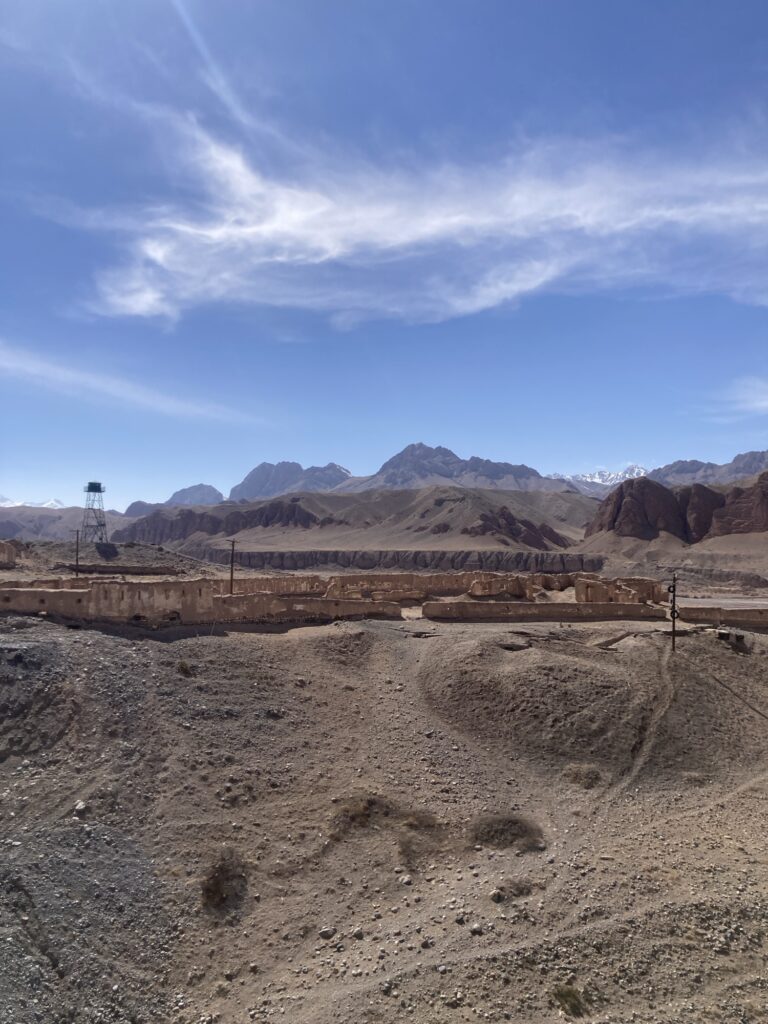
Once on foot, we crossed the final stretch of road towards the Kyrgyz side, past old forts that marked the limit of the Russian Empire, and subsequently the Soviet Union. The shift in atmosphere was immediate: relaxed, friendly, curious. Kyrgyz soldiers were keen for a chat and gave us a lift down the road to their border post in their battered old Lada Niva. They then helped us through passport control, and one waved down a truck driver prepared to give us a lift to Sary Tash.
We recommend changing any Chinese Yuan into Kyrgyz Som at the border, there are no formal change bureaus but you should have luck with truckers heading to China and the Kyrgyz officials can probably help out.
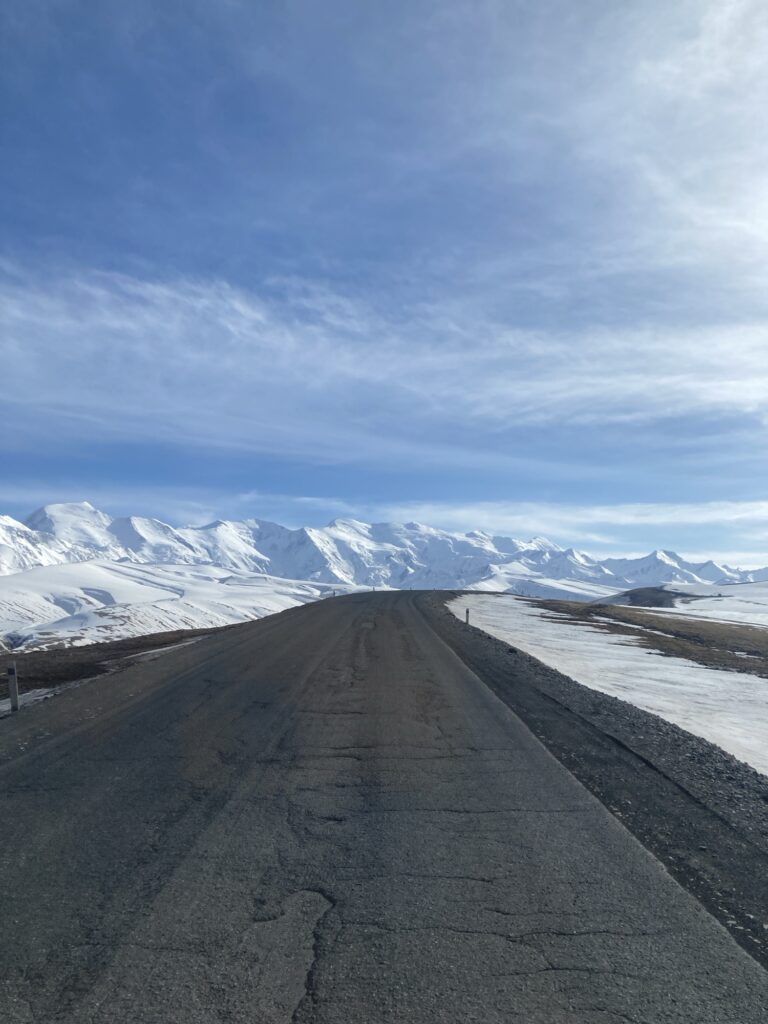
After the trucker giving us a hitch had finished clearing customs, we climbed into the cab and rolled through the magnificent high-altitude plains for around two hours, arriving in Sary Tash at 20:30 (18:30 Kyrgyz time). The valley and mountains were still almost entirely snowbound in mid April, a wild and awesome landscape, even better viewed from the cabin of a truck with our new mate Xenish.
Overnight in Sary Tash
We camped overnight just out of town, but there are several guesthouses in the village. The one we enquired at cost 1,800 som per person (around 120 yuan) including dinner and breakfast. At nearly 3,000 metres Stay Tashkent can be cold and hostile, so be ready with the right equipment or fork out the cash for a guesthouse. Even when paying for a guesthouse, the journey would still be cheaper than the cross-border bus.
Sary Tash to Osh
The next morning we hoped to hitch a lift again, but at that hour there were only marshrutkas as the flow of trucks from the border hadn’t yet started. Marshrutkas leave loosely around 08:30, 09:00, and 09:30, with a few more later on depending on demand. We ended up in a shared taxi around 10:30, paying 500 som each for the winding, scenic ride into Osh, arriving at 13:00.
There are plenty of accommodation options in Osh, otherwise it’s cheap and easy to get a Yandex taxi to the border with Uzbekistan, walk across and then travel on to Andijan or Tashkent.